Backcountry Radio Program
As backcountry use grows around Snoqualmie Pass, more parties end up sharing the same drainages and lines on the same day. That creates a familiar risk: one group dropping into terrain while another is still skinning below, or ascending while someone else is already committed to a descent. Clear, brief radio contact between groups can reduce those close calls.
The Backcountry Radio Program is a community-driven effort organized by SPART, a member unit of King County Search and Rescue, with input from local guides, ski area staff, and other recreationists. It defines shared FRS radio channels for three popular zones so parties who do not know each other can still announce where they are and what they plan to do. The Northwest Avalanche Center helps promote the program in the interest of public safety; NWAC does not design, manage, or monitor the channels.
The idea builds on earlier work in Telluride, Colorado, where shared channels in high-use avalanche terrain were studied as a way to make group-to-group communication more orderly and reduce hazardous overlaps. SPART adapted that model for Snoqualmie Pass and can share materials with communities interested in starting something similar elsewhere.
Snoqualmie Pass channels
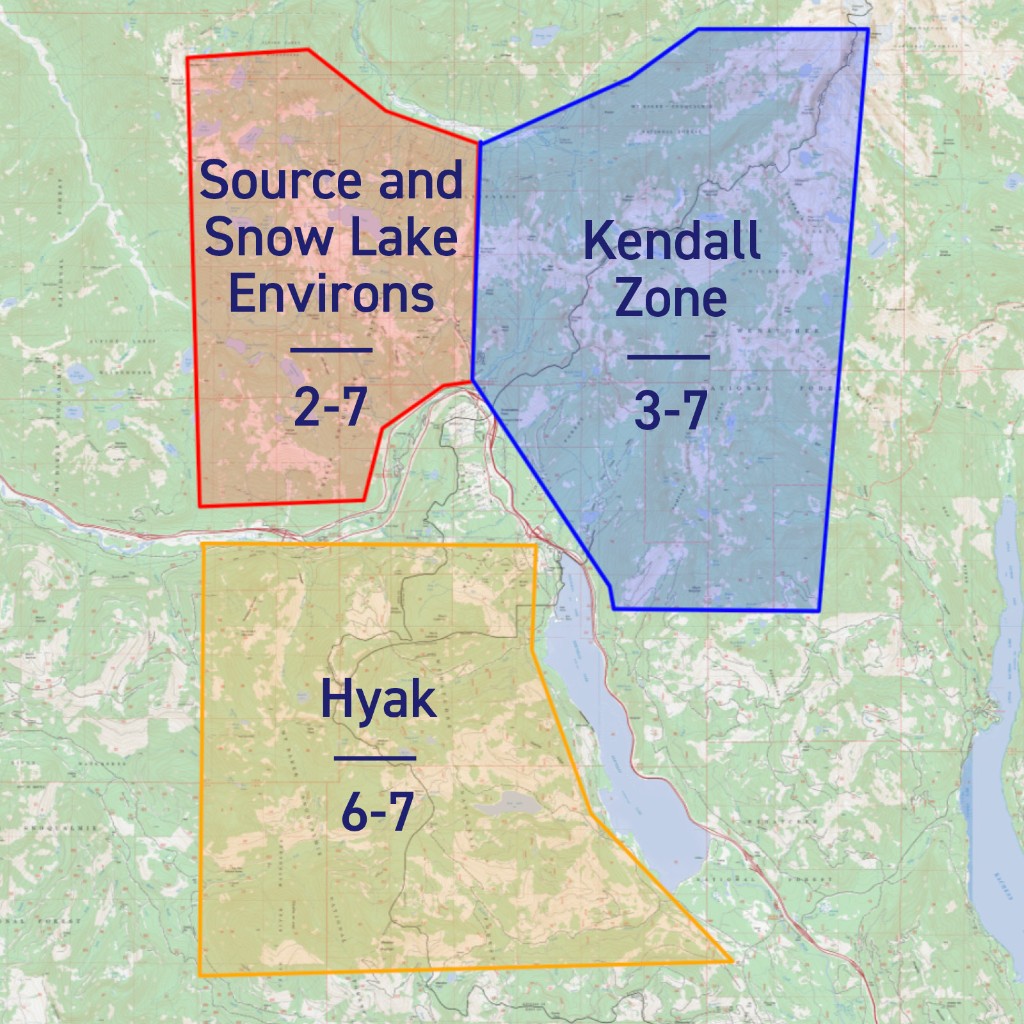
Channel notation such as 2-7 means FRS channel 2 with privacy code (tone) 7. Because radio range is limited and the Pass covers a lot of connected terrain, the program uses separate channels by drainage so chatter stays relevant to people actually sharing that zone.
Group monitoring channels
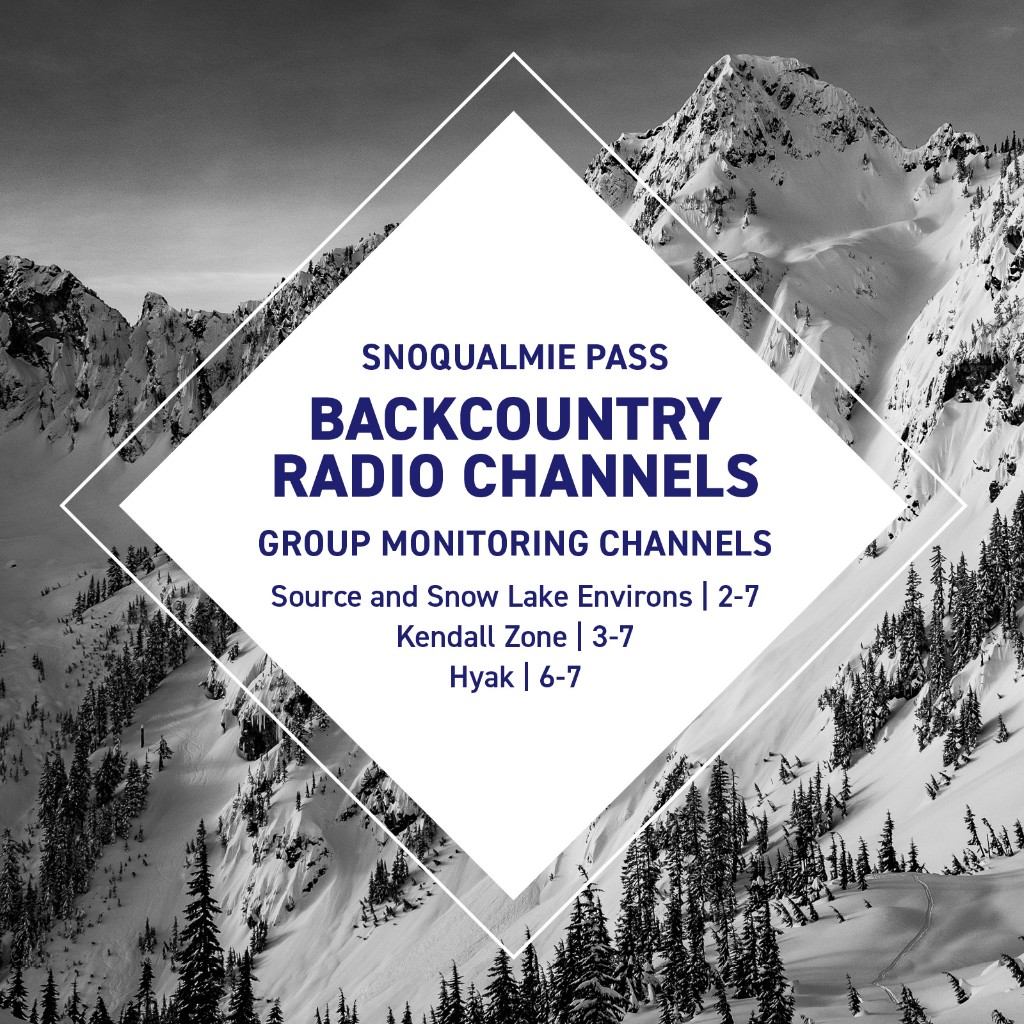
- Source and Snow Lake environs — 2-7
- Kendall Zone — 3-7
- Hyak — 6-7
When you enter one of these zones, switch to that channel and code and leave the radio on. Keep transmissions short and specific: who you are (a group name is enough), where you are, and what you intend to do next.
When to use the channels
Between groups
- Before your party enters complex or avalanche-prone terrain
- To share hazards, recent avalanche activity, or other critical snow information
- When your group is clear of a line or runout, so others know the zone is open
Also useful
- Asking another party to call 911 or start organized help if you cannot reach emergency services yourself
- Brief partner-to-partner traffic while traveling through complex terrain (for example, between islands of relative safety)
For everyday talk inside your own party, use a second, private channel. That keeps the zone monitoring channel free for the messages other groups need to hear.
Important limits
These channels are not a substitute for a rescue plan. They are not monitored by SAR or ski patrol. Do not rely on them to summon help.
If you need rescue:
- Call 911 whenever you have cell service.
- If you do not have service, use an emergency beacon or other dedicated signaling device if you carry one.
- Only as a last resort, use the zone channel to reach someone who can call 911 for you.
Radios are not required for backcountry travel. The program works best when groups that share a zone all carry compatible FRS radios, know the channel for that drainage, and keep traffic concise.
Radios and setup
Any standard FRS radio that follows common channel and privacy-code numbering will work. Many inexpensive handhelds and radios marketed for backcountry or snowmobile use support the needed channels and codes. Before you rely on a radio in the field, confirm that its channel and tone settings match the published standards—some models need manual programming to align with other brands.
Feedback and expansion
Questions, suggestions, or interest in bringing a similar program to another area: email bc_radio@kcspart.org.
More detail is also published on NWAC’s Backcountry Radio Channels page.